
The remote plains of Kaeya in Senanga District are quiet and sandy, characterized by rising temperatures and erratic rainfall. They are home to Dorothy Makina, a 63-year-old farmer from Kande village. The farmers of Kaeya depend on a successful crop and market for their products to sustain their livelihoods. Dorothy faces several barriers when selling her produce. Market centres for the sale of her crops are far from her, and typically only accessible via ox cart, hiring an oxcart can cost farmers up to K900 ($37.16 as of 4th July 2025) to reach the main market in Senanga town. However, 78% of the farmers in this region live on less than $2 a day.
In these conditions, Dorothy has struggled to sustain herself and her family. Dorothy was among the lead farmers selected for aggregation skills training. The training has been a game changer, addressing bottlenecks she has long faced in her business.
“Before the training in aggregation, I had challenges with market access, negotiating prices, thereby reducing my income,” she narrated. “Now, I know how to organize, add value, and bargain better for our produce.” Dorothy is passionate about spreading the message of aggregation and imparting her knowledge, she has since trained eight (8) farmer groups and identified 200 clients/farmers to work with to employ the aggregation model and provide her with a variety of crops for sale to commercial buyers: millet, cowpeas, cassava, groundnuts, bambara nuts.
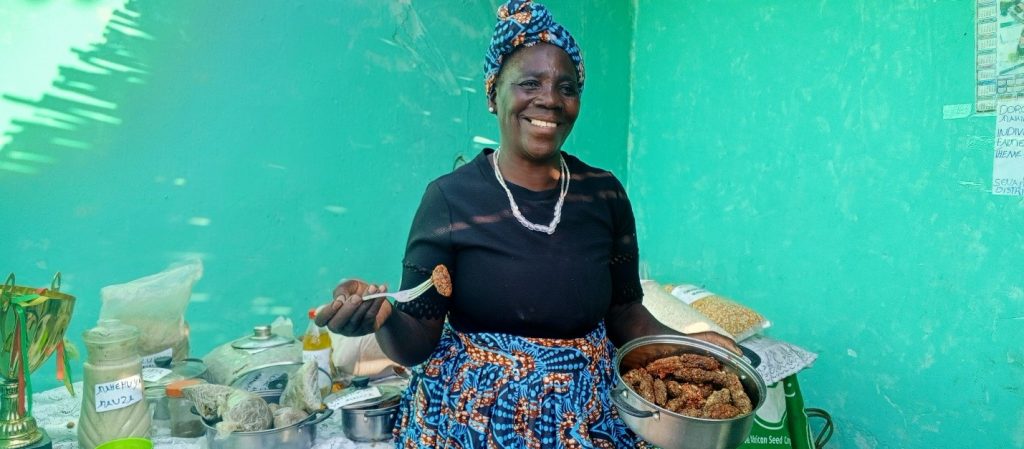
She advises fellow farmers interested in aggregation to focus on “understanding the aggregation process, building collaborative relationships and having clear communication skills”, as well as being able to identify opportunities. Dorothy’s story demonstrates the power of knowledge and how with time and continued support, communities like Kaeya can see growth and sustained improvement in their livelihood.
 English