For 27-year-old Naoni Kkhoma of Kapuma Village, Mambwe District, nothing was more painful than watching her young child lose weight and become increasingly weak without understanding why. A married mother of four, Naoni thought she was doing everything possible to care for her family. However, a lack of knowledge about proper nutrition nearly cost her third child a healthy start in life.
“I noticed that my child was no longer eating well and was becoming thinner every day,” Naoni recalls. “At first, I did not understand what was causing the problem.”
As her child’s condition worsened, concern quickly turned into fear. The child lost appetite, became visibly underweight, and eventually required medical attention. Health workers later identified the child as malnourished and recommended immediate treatment and nutrition support.
“It was a very difficult time for me as a mother,” says Naoni. “Seeing my child sick and weak made me realize that I needed help and guidance.”
Naoni first heard about a community nutrition project through fellow community members and during a visit to a local health facility. There, she was introduced to a nutrition champion who began working closely with her to improve her understanding of child nutrition.
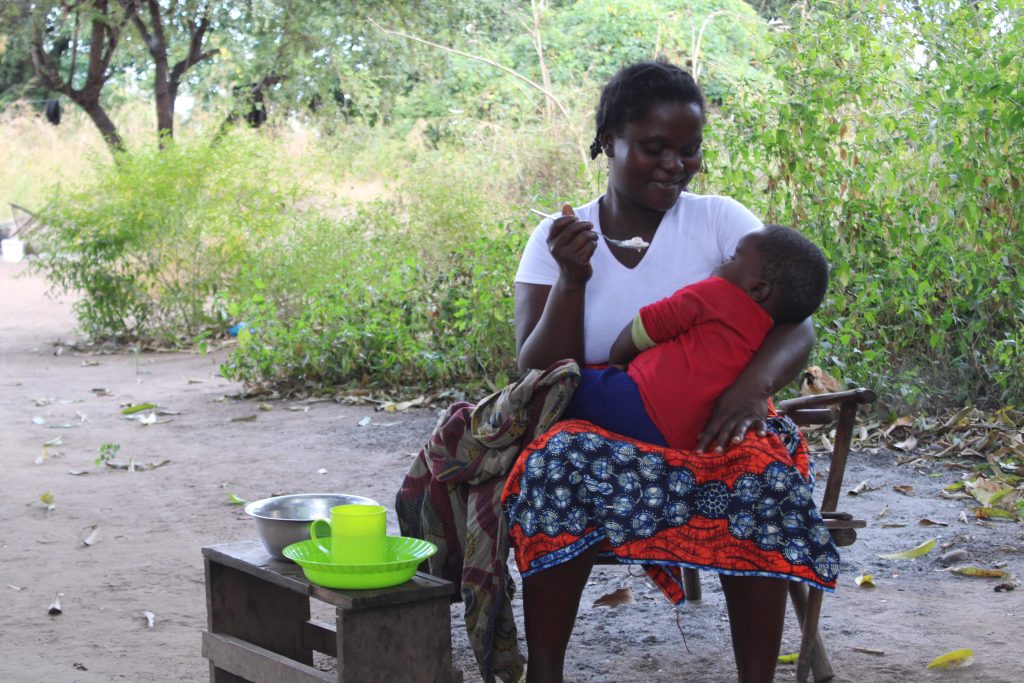
“The nutrition champion taught me how to prepare balanced meals using foods that are readily available in our community,” she explains. “I learned that good nutrition does not always require expensive foods.”
Through the program, Naoni was trained on the importance of dietary diversity, food preparation, and feeding practices for young children. She learned how to combine locally available foods to create nutritious meals that support healthy growth and development.
“One of the biggest lessons I learned was that even simple foods can provide important nutrients when prepared correctly,” she says. “We started including foods such as vegetables, legumes, and small fish in our meals.”
The results were remarkable.
Within six weeks of implementing the new feeding practices, her child’s health began to improve significantly. Appetite returned, weight increased, and the child regained strength and energy.
“I was amazed by the change,” Naoni says with a smile. “My child became active again, started eating properly, and looked much healthier. It gave me hope and confidence.”
The transformation did not go unnoticed.
Neighbors and fellow mothers in Kapuma Village began asking Naoni what had changed. Curious about her child’s recovery, many sought advice and guidance on improving nutrition within their own households.
“People started coming to my home to ask what I was feeding my child,” she recalls. “I shared what I had learned because I wanted other children to benefit too.”
Today, Naoni actively shares nutrition messages with other mothers in her community, encouraging them to make use of affordable and locally available foods.
“I tell other women that nutrition is not about spending a lot of money,” she says. “Even small fish, vegetables, and other foods that are available in our communities can make a big difference to a child’s health.”
Her experience has inspired many women to adopt better feeding practices and seek nutrition information for their families.
“The project helped me save my child, but it also gave me knowledge that I can share with others,” Naoni explains. “When one mother learns, many children can benefit.”
Community members have since reported increased interest in nutrition education, with more families paying attention to meal preparation, dietary diversity, and child feeding practices.
Health workers and community volunteers have also noted positive changes as mothers become more aware of how nutrition affects child growth and development.
Looking back, Naoni believes that community support and education played a critical role in her family’s journey.
“If I had not received the training and support, I do not know what would have happened,” she says. “The knowledge I gained changed my child’s life and changed me as a mother. My dream is for every child in our community to grow up healthy and strong,” she says. “If we continue sharing what we learn, we can help more families and give our children a better future.”
Naoni Kkhoma’s journey demonstrates how community-based nutrition programs can transform lives, restore hope, and empower mothers to become champions of change within their communities.
Story by Memory Musamba
Pictures by Memory Musamba
 English