
In Mapungu Village in Mpika District, Muchinga Province of Zambia, 38-year-old Elimas Tonga is proving that with the right knowledge, support, and determination, smallholder farming can become a pathway to a better life.
A married father of four children, three boys and one girl, Elimas has spent most of his life working as a peasant farmer. Like many rural farmers, he faced significant challenges that limited his ability to improve his family’s livelihood.
“Before joining the project, I faced numerous challenges in vegetable production, including limited knowledge of improved farming practices, poor access to quality inputs, and difficulties in finding reliable markets,” Elimas explains. “As a result, production levels were low, household income was inadequate, and my family struggled to meet basic needs.”
For years, Elimas cultivated vegetables mainly for household consumption. While this helped feed his family, it generated little income and offered limited opportunities for growth. Everything changed when he joined the project and began receiving training and technical support.
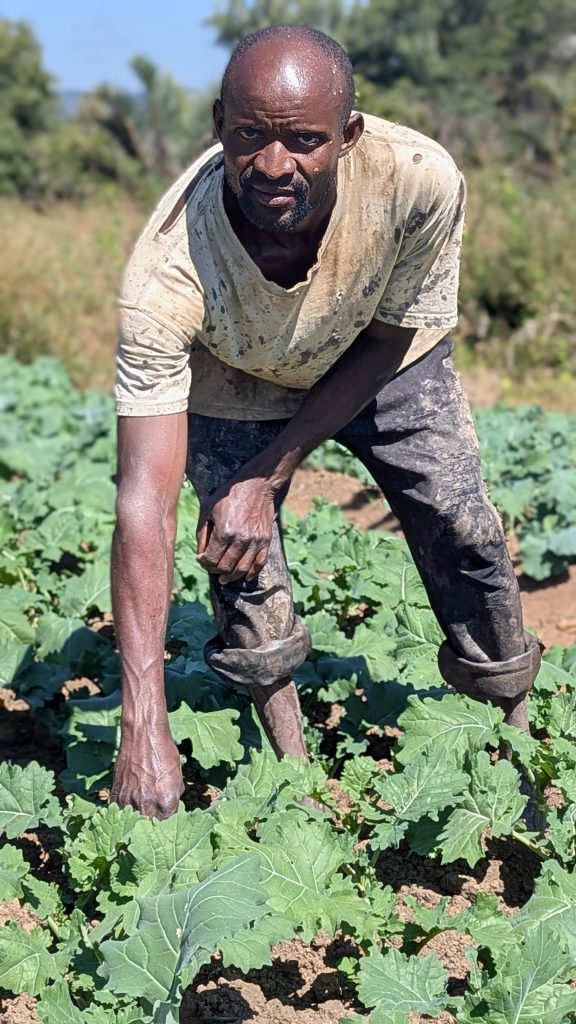
Through the project, Elimas participated in training on climate-smart agriculture, vegetable production, post-harvest management, nutrition, and business management. He also benefited from regular technical support provided through extension services, equipping him with practical skills to improve productivity and manage his farm as a business.
“The project has transformed my farming,” says Elimas. “Before, I grew vegetables mainly for home consumption, but now I produce enough to sell and earn a steady income. I can support my family’s needs and have gained confidence as a farmer.”
His hard work and newly acquired skills have already begun paying off. From his most recent vegetable harvest, Elimas earned a profit of K3,870, providing much-needed income to support his household.
Beyond improving his vegetable production, Elimas is now exploring new opportunities to diversify his livelihood and strengthen his family’s resilience.
“I have even constructed a fishpond beside my garden after being trained by the project through the Ministry of Fisheries and Livestock,” he says proudly. “I plan to buy fingerlings from the money I will make from my vegetable garden when I harvest. I am grateful for the training and support provided through the project.”
Today, Elimas is no longer farming merely to survive. He is building a sustainable agricultural enterprise that is improving his family’s well-being and creating opportunities for future growth. His journey demonstrates how targeted training, technical support, and access to knowledge can empower smallholder farmers to move from subsistence production to profitable farming.
As he looks ahead, Elimas remains committed to expanding both his vegetable garden and fish farming venture, confident that the skills and support he has received will continue to help him provide a brighter future for his family.
Story by: Hebron Mwale
Picture by: Hebron Mwale
 English