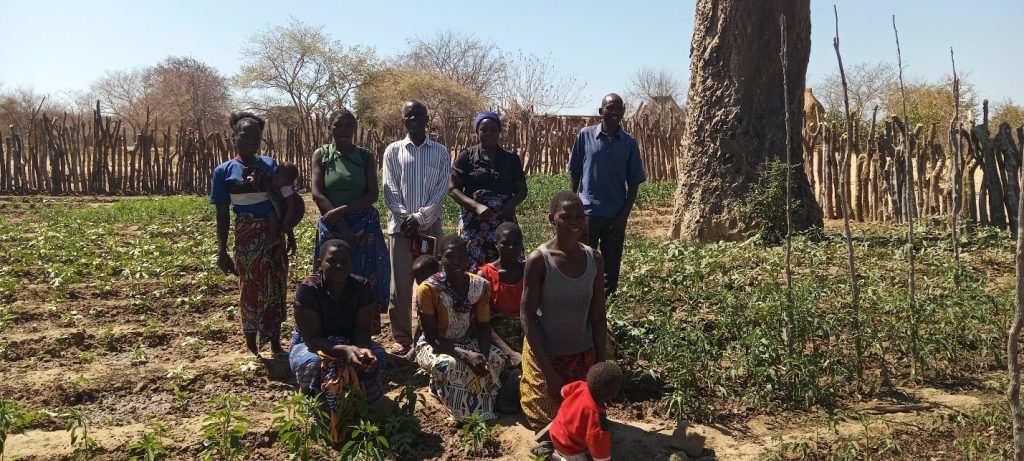
Twakondwa Self-Help Group was formed in early 2024 following a sensitization program conducted under the Disability Inclusion Disaster Risk Reduction (DIDRR) Project in Syambabala. The project team visited the area to raise awareness about the project and inform community members about the activities that would be implemented.
After hearing about the initiative, parents of children with disabilities and persons with disabilities became interested and came together to form the group.
The group initially had 35 members. However, along the way, some members left because they expected direct handouts and immediate assistance. Despite this, the remaining members stayed committed and continued meeting regularly. Together, they identified practical ways to improve their livelihoods and established two income-generating activities: chicken rearing and gardening.
Through the income generated from their gardening activities, members were able to support one another by purchasing seeds and buying maize to help feed their families during the drought period. Today, every member of the group owns village chickens as a result of the group’s collective efforts and support system.
“In the beginning, many people thought we would fail because we did not receive handouts, but we decided not to give up. Today, we are proud that every member has something they are working on,” said one group member.
In 2024, members contributed their own resources to register the group officially. Although they were unable to apply for funding that year because the application period had already closed, they remained determined and did not give up.
When the Gwembe Council later announced applications for grants and loans, the group ensured that all the necessary documentation and requirements were in place before applying. Their hard work paid off when they were selected among the successful applicants and awarded a grant of K40,000 to support an irrigation farming project.
Using the grant, the group purchased two water pumps and irrigation pipes to strengthen their farming activities and improve food production within the community.
However, while returning from Lusaka after acquiring the equipment, the group chairperson and another member were involved in an accident and sustained injuries. Despite this unfortunate incident, the group has remained resilient and focused on achieving its goals.
“Before the DIDRR project, many of us had lost hope and confidence, but now we know that disability does not mean inability. We are able to stand and work for ourselves,” shared another member of the group.
The members expressed deep gratitude to ADRA Zambia and Christian Blind Mission through the DIDRR Project for empowering persons with disabilities with knowledge, skills, and confidence. They shared that the project has changed their mindset, strengthened their independence, and encouraged them to become self-reliant and active contributors within their families and communities.
Story by: Cynthia Nyirenda
 English