The Adventist Development and Relief Agency (ADRA) Zambia has officially launched the WASH Integrating Nutrition in Schools (WINS-2) Project aimed at improving access to safe water, sanitation, nutrition, and life skills among vulnerable children and communities in Chirundu and Siavonga districts.
The ZMW 5.5 million project is being implemented with support from the Frankfurt Newspaper of Germany (Frankfurter Allgemeine Zeitung Fuer Deutschland – FAZ) and Stiftung Kinderzukunft. The initiative will run from May 2026 to December 2027 and is expected to directly benefit more than 1,770 people while over 8,850 community members will benefit indirectly.
The WINS-2 Project seeks to contribute to children’s right to education, improved nutrition, and safer learning environments through interventions such as the installation of solar-powered water systems, construction of sanitation facilities, establishment of nutrition gardens, promotion of menstrual hygiene management, reusable sanitary pad production, and life skills training for learners and youths.
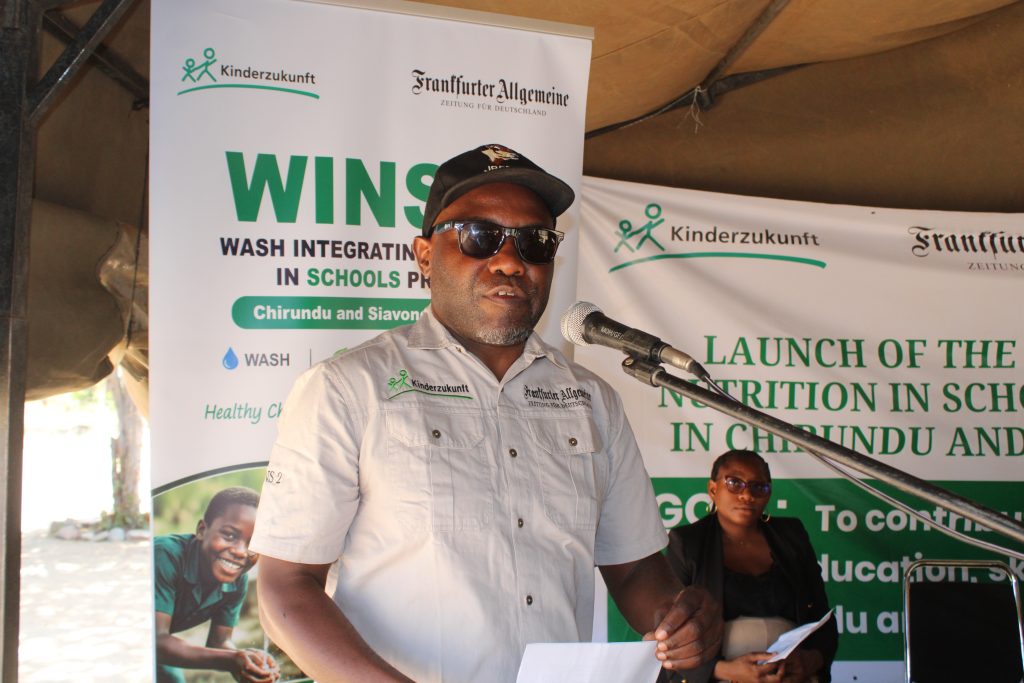
Speaking during the launch event, ADRA Zambia Country Director Kennedy Habasimbi said the project reflects ADRA Zambia’s commitment to improving the wellbeing of vulnerable children and communities through sustainable and inclusive development interventions.
“The WINS-2 Project is not only about water and sanitation. It is about restoring dignity, improving school attendance, supporting nutrition security, empowering youths with life skills, and creating opportunities for a better future,” said Mr. Habasimbi.
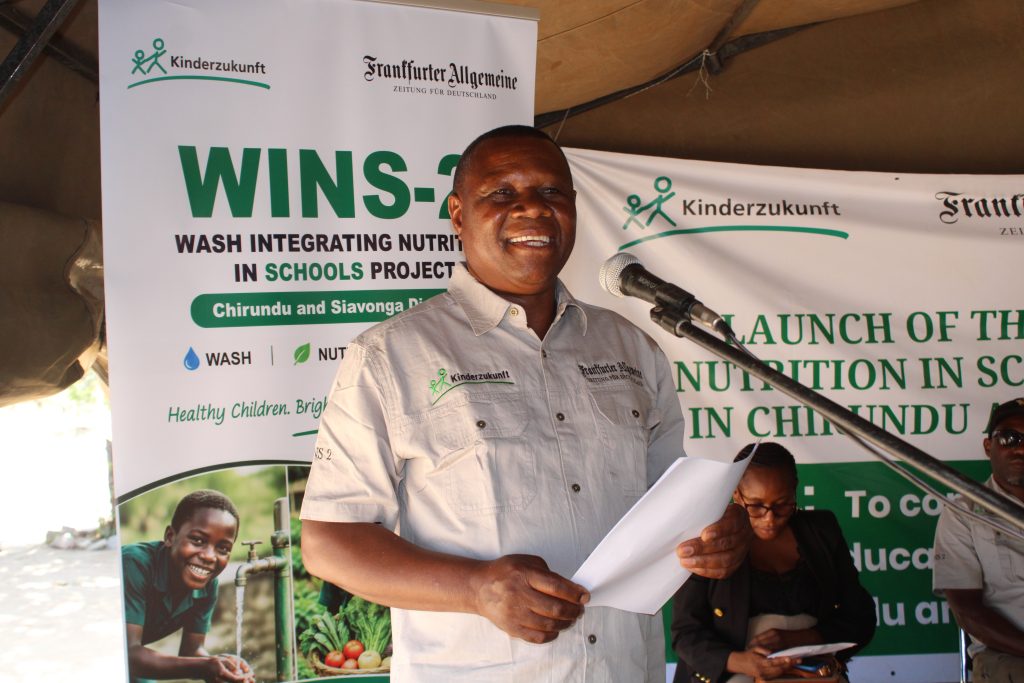
Guest of Honour and Siavonga District Commissioner Geoffrey Jakopo noted that the project comes at a critical time when many schools and communities continue to face challenges accessing clean and safe water.
“Many learners, especially girls, walk long distances in search of water, leading to absenteeism, poor academic performance, and in some cases school dropouts. The WINS-2 Project is therefore not just a water project. It is an investment in education, nutrition, health, dignity, and the future of our children,” said Mr. Jakopo.
Mr. Jakopo further commended ADRA Zambia and its cooperating partners for complementing government efforts through sustainable community-based interventions.
“The integration of solar-powered water systems, school gardens, reusable sanitary pad production, and life skills training demonstrates a holistic and innovative approach to development,” he added.
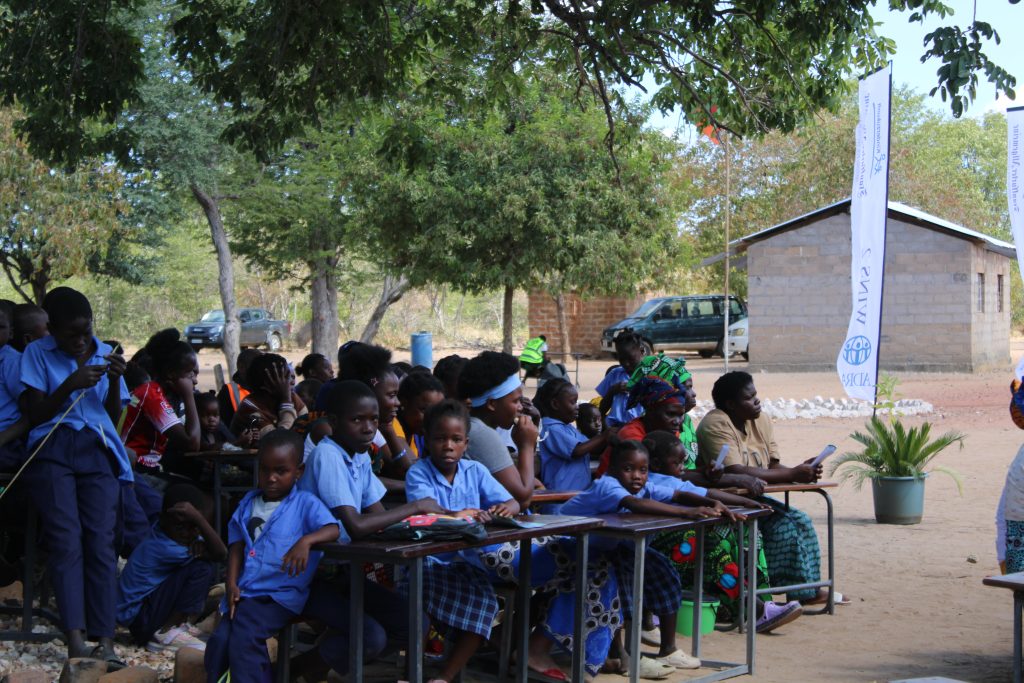
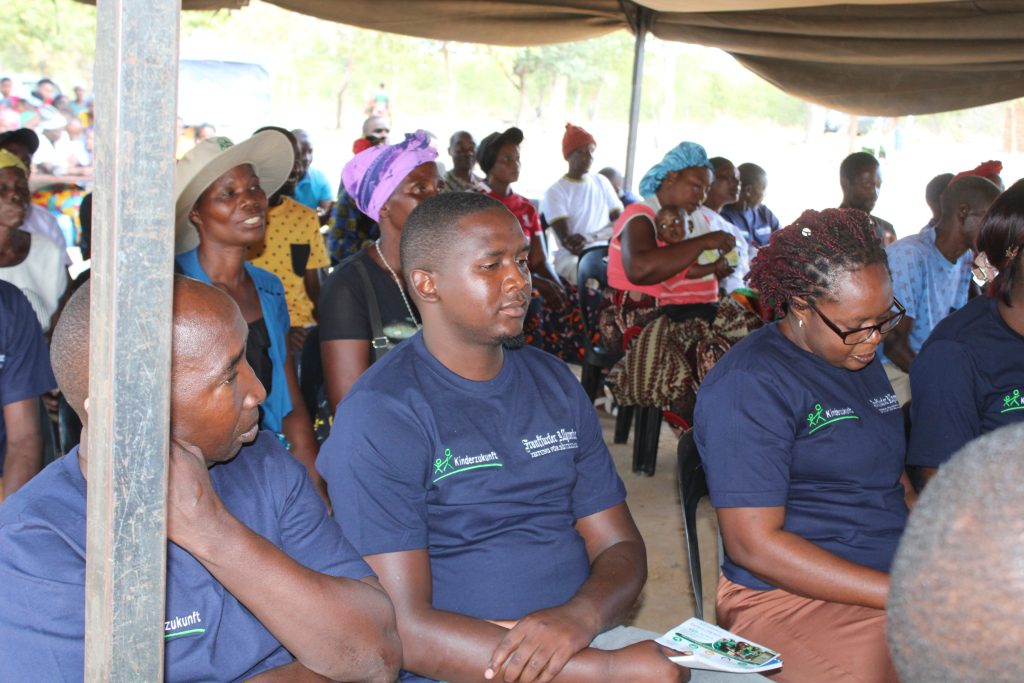
The launch brought together government officials, traditional leaders, cooperating partners, community representatives, and members of the media, reaffirming the shared commitment towards improving education, health, and resilience in vulnerable communities.
Story by Memory Musamba
Photos by Memory Musamba
 English